Zulu Chess
Family history is more than names on a family tree. It is the stories, lessons, laughter, struggles, and traditions that shape who we are. Yet many people find it difficult to start conversations about family history. Elders may feel pressured by long lists of questions, while younger generations worry about asking the “wrong” thing.
What if there was a gentler way?
What if family history could be discovered one game at a time?
Why Direct Questions Don’t Always Work
When people hear, “Tell me your life story,” they often don’t know where to begin.
Some elders may:
- Feel overwhelmed by broad questions.
- Think their stories are not important.
- Struggle to remember events in chronological order.
- Feel uncomfortable discussing painful memories.
As a result, conversations can become short and awkward, leaving everyone disappointed.
The Power of Playing Together
Traditional games create a relaxed environment where stories emerge naturally.
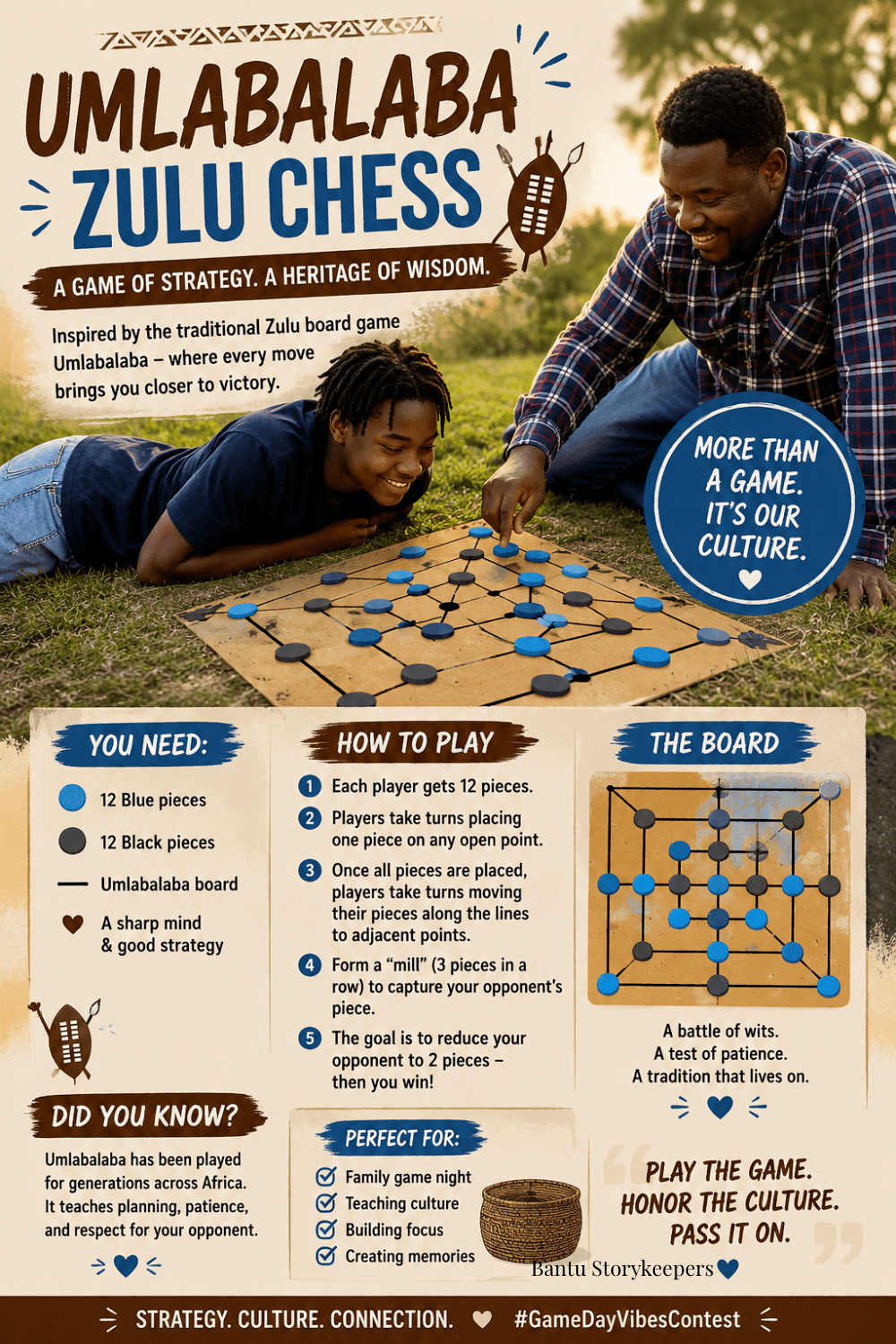
Umlabalaba, often called Zulu Chess, is a game of strategy, patience, and observation. As players focus on the board, conversation flows more freely. The pressure disappears because the goal is not to conduct an interview—it’s to enjoy time together.
Many of the best family stories appear unexpectedly:
“That move reminds me of my uncle.”
“We used to play games like this after school.”
“Your grandfather was very competitive.”
One memory leads to another.
The Storykeeper Method
Try adding simple Storykeeper Cards to your Umlabalaba game.
Whenever a player forms three in a row, they draw a card.
Examples include:
- What game did you play as a child?
- Who taught you an important life lesson?
- What family tradition should never be forgotten?
- What was your favourite meal growing up?
- What do you remember about your grandparents?
Players may answer, pass, or tell a different story that comes to mind.
There are no wrong answers.
Focus on Memories, Not Facts
Many people approach family history like a research project. While dates and places matter, relationships matter more.
Instead of asking:
“Where were you born?”
Try:
“What do you remember about the place where you grew up?”
Instead of:
“What year did this happen?”
Try:
“What was life like back then?”
Stories often reveal far more than facts alone.
Creating a Family Legacy
The goal is not to gather every detail in a single evening.
Family history is a journey.
One game night may reveal a childhood memory.
Another may uncover a family tradition.
A third may inspire younger generations to ask new questions.
Over time, these small conversations become a priceless collection of stories that might otherwise be lost.
More Than a Game
Umlabalaba teaches strategy and patience, but it can also become a bridge between generations.
When families gather around a game board, they are doing more than playing.
They are preserving memories.
They are passing on wisdom.
They are strengthening connections.
Sometimes the best way to learn your family history is not to ask more questions.
It’s to create more moments together.
 Bantu
Bantu 
Leave a comment