
When we strip away colonial bias and examine Shaka Zulu through the lens of organisational development, a more particular truth emerges: Shaka was not only a formidable leader but also an exceptional manager. He built systems, not just armies. He created structure, not just dominance. And he understood intuitively, the difference between visionary leadership and operational management, a distinction many entrepreneurs struggle with today.
Leadership vs. Management: Shaka as the Blueprint
Entrepreneurs often blur these two roles, but Shaka embodied both most importantly he kept them in balance.
Visionary Leadership
Leadership is about vision, inspiration, and cultural transformation. Shaka excelled here.
Shaka’s Leadership Strengths
- Reimagining what was possible: He transformed fragmented clans into a unified nation — a bold, visionary act.
- Creating a shared identity: Through regiments, rituals, and discipline, he built a culture of excellence and belonging.
- Inspiring loyalty and belief: His charisma and clarity of purpose mobilised thousands.
- Driving innovation: The iklwa spear, new battle formations, and strategic mobility were all leadership-level innovations.
For entrepreneurs
Shaka was a leader who shifted paradigms.
- Leadership is your why, your story, your culture, your brand.
- It’s the ability to inspire people to believe in something bigger than themselves.
- It’s the courage to innovate and disrupt.
Management Mastery
Management is about order, process, and resource optimization. This is where Shaka’s genius becomes even more impressive.
Shaka’s Management Strengths
- The amabutho system: A structured, age-based workforce with clear roles, training, and accountability.
- Resource allocation: Centralised cattle management ensured stability, loyalty, and economic growth.
- Operational discipline: Standardised training, logistics, and communication created efficiency.
- Data and intelligence: His network of izinduna functioned like a modern management team: gathering information, advising, and executing strategy.
For entrepreneurs
Shaka was a manager who built systems that outlived him.
- Management is your how — your systems, processes, operations, and financial controls.
- It’s the difference between a brilliant idea and a sustainable business.
- Without management, leadership becomes chaos.
Why This Matters for Entrepreneurs Today
Many founders especially visionary, creative, purpose-driven ones, naturally lean toward leadership. But businesses fail not because of weak vision, but because of weak structure.
Shaka’s story teaches three essential lessons:
1. Vision without structure collapses.
Shaka’s innovations worked because he built the systems to support them.
2. Structure without vision stagnates.
His management systems were powerful because they were tied to a national vision.
3. Wealth is created through disciplined organization.
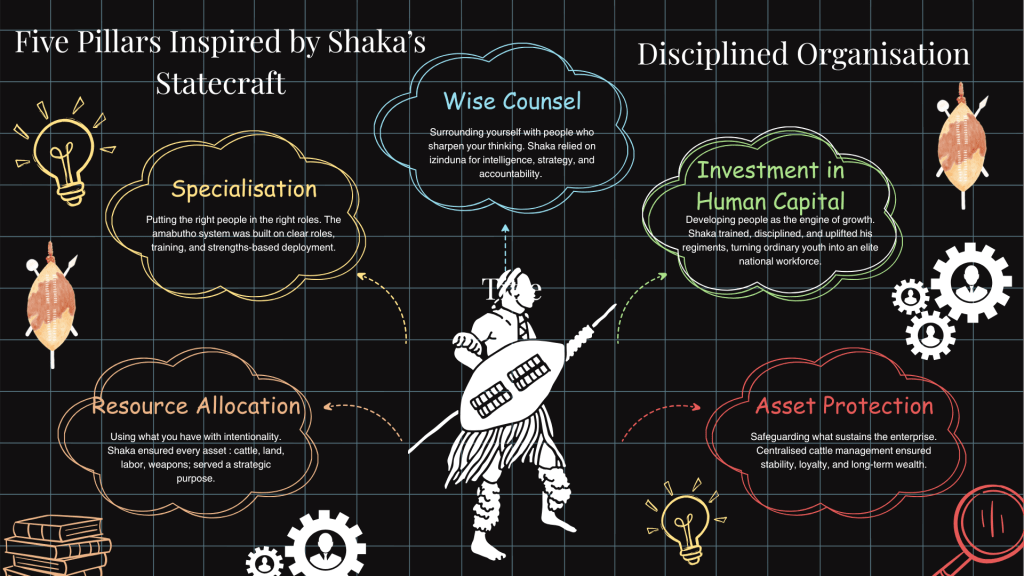
Just like “The Richest Man in Babylon,” Shaka understood
Resource Allocation
Using what you have with intentionality. Shaka ensured every asset; cattle, land, labour, weapons served a strategic purpose. For entrepreneurs, this means directing time, money, and energy toward activities that actually move the mission forward, rather than scattering resources across unfocused efforts.
Specialisation
Putting the right people in the right roles. The amabutho system was built on clear roles, training, and strengths-based deployment. Modern founders thrive when they stop trying to do everything themselves and instead build teams where each person operates in their zone of excellence.
Wise Counsel
Surrounding yourself with people who sharpen your thinking.
Shaka relied on izinduna for intelligence, strategy, and accountability. It’s important for Entrepreneurs to have mentors, advisors, and strategic partners who offer perspective, challenge assumptions, that can help refine decisions.
Investment in Human Capital
Developing people as the engine of growth.
Shaka trained, disciplined, and uplifted his regiments, turning ordinary youth into an elite national workforce. Businesses grow when leaders invest in skills, culture, and continuous development because people are the most valuable asset
Asset Protection
Safeguarding what sustains the enterprise. Centralised cattle management ensured stability, loyalty, and long-term wealth. Entrepreneurs must protect their assets, intellectual property, finances, brand reputation, customer trust through structure, compliance, and disciplined operations.
 Bantu
Bantu 
Leave a comment